AWS LZA vs NTC Deep Dive Part 3: Day 2 Operations and the Conclusion
Pipelines, upgrades and AI agent context after the deployment is done, plus a decision table from running both platforms.
Practical writing on AWS, automation, and keeping platforms calm under load.
No fluff - just lessons from real engagements.
Pipelines, upgrades and AI agent context after the deployment is done, plus a decision table from running both platforms.
Log archive, Security Hub, GuardDuty and Inspector on LZA and NTC, and what happened when I finally triaged 316 findings.
What Day 1 looks like on LZA and NTC, from the first bootstrap to a working multi-account organization with accounts and SSO.
A small Go CLI that renders per-team Kiro CLI agents, steering and skills from templates, pins MCP server versions centrally and keeps secrets out of every committed file.
A pinned Gitea 1.27 on OrbStack's Kubernetes, provisioned end to end with OpenTofu: Gateway API instead of Ingress, and a CI runner that reaches the host Docker daemon without Docker-in-Docker.
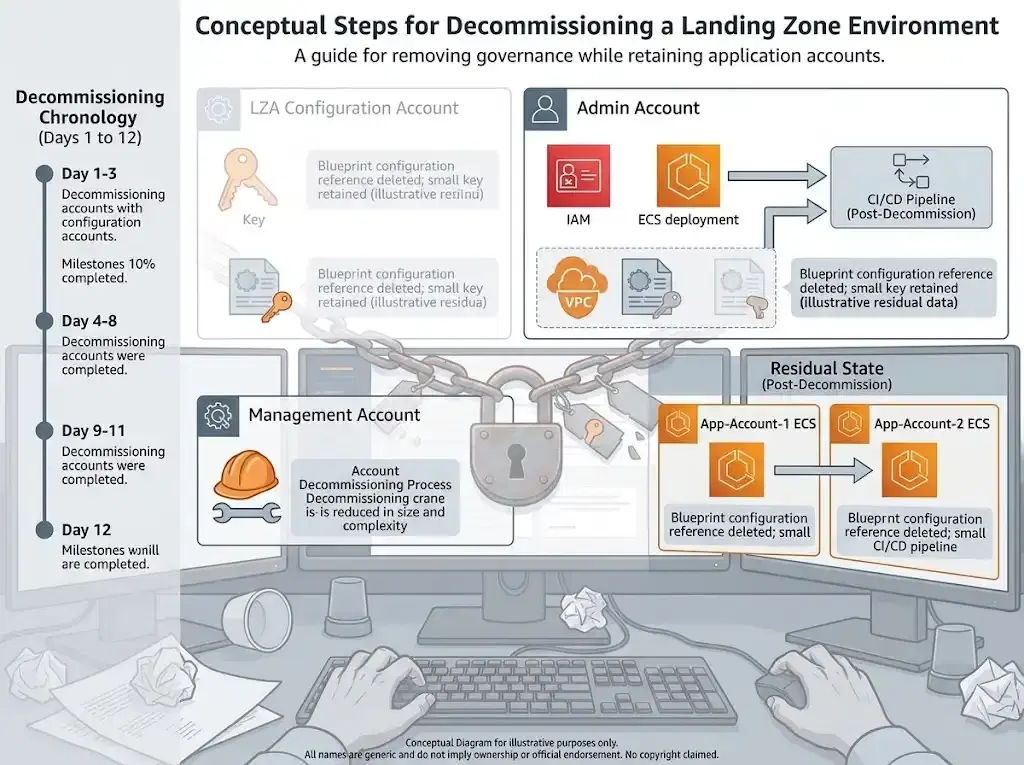
Taking a full LZA and Control Tower deployment back out again: why the order is forced, the CloudFormation deadlock nobody documents, and what the sweep costs.
Wiring AWS Labs' lza-mcp-server into the container deployment from Part 2, then pointing its diagnosis tool at a real failure to see whether it finds the issue.
The deployment report. A Control Tower landing zone I had to build by hand because the account failed the prerequisites, fourteen failed SSM automation runs, and the guardrail that LZA created, attached to itself, and then got locked out.
Before standing up a fresh AWS Landing Zone Accelerator v1.16.2 environment on the ECS container pipeline instead of CodePipeline, I spent a morning on the release notes, the container/ folder in the repo, and the lza-universal-configuration v1.3.1 release. Here is what that research turned up.
Occasional, no-fluff writing on AWS, DevOps, and running platforms that stay up. No spam, unsubscribe anytime.